What Is a Digital Publishing Platform? Types, Benefits, and How to Choose
Publishing content online can look simple from the outside. You create a document, upload it, and share a link. But once you need interactive features, analytics, branding, subscriptions, or multiple publishing formats, a basic PDF or design tool quickly starts to feel limiting. That’s where a digital publishing platform comes in.
Kompama is a useful primary keyword for people searching for information connected to digital publishing and online content platforms. Whether you’re a business owner, marketer, educator, publisher, or independent creator, understanding how these platforms work can help you choose the right technology instead of paying for features you’ll never use.
This guide explains the main types, key benefits, practical use cases, and the most important questions to ask before choosing a platform.
What Is a Digital Publishing Platform?
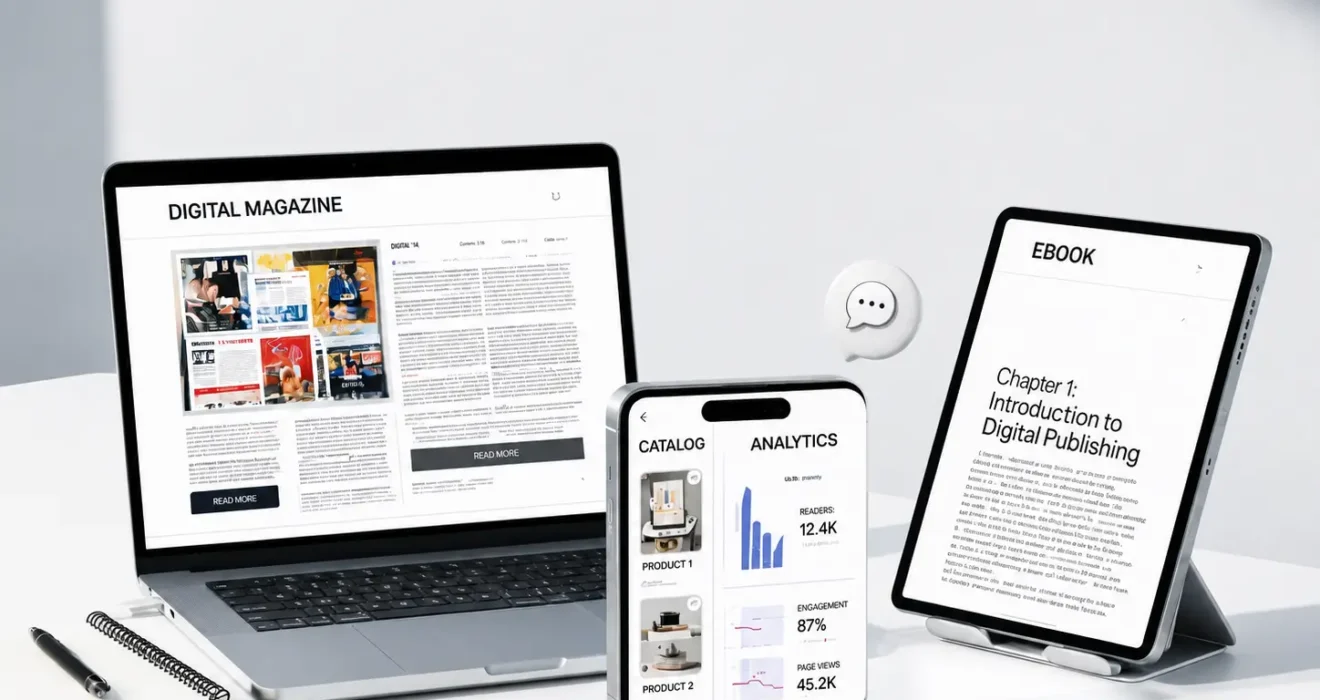
A digital publishing platform is software that helps users create, manage, publish, distribute, and sometimes monetize digital content online. Depending on the platform, that content may include ebooks, magazines, catalogs, brochures, reports, newsletters, blog posts, educational materials, and interactive publications.
The major difference between a publishing platform and a simple file-sharing tool is the workflow. Instead of only uploading a PDF, you may be able to add clickable links, videos, forms, animations, branded layouts, analytics, and sharing tools.
For example, an online catalog can include clickable product links, while a digital magazine can include video content and interactive elements. A business report can be embedded directly on a website and tracked to see how readers engage with it.
The right platform depends heavily on your content format and goals. A blog publisher may need a CMS, while a company creating product catalogs may benefit more from an interactive publishing solution.
What Are the Main Types of Digital Publishing Platforms?
Not every digital publishing platform solves the same problem. Choosing the wrong category can lead to unnecessary costs and a frustrating workflow.
1. Interactive publishing platforms
These tools are designed for magazines, catalogs, brochures, ebooks, reports, and other page-based content. They often convert PDFs into web-friendly publications and add features such as video, clickable hotspots, animations, and reader analytics.
2. Content management systems
A CMS is generally better for blogs, news websites, documentation, and regular web articles. It focuses on creating and managing web pages rather than reproducing a designed magazine or brochure.
3. Headless CMS platforms
These separate content management from the presentation layer. A company can create content once and deliver it to a website, mobile app, or other digital channel through APIs.
4. Newsletter publishing platforms
These are built around email subscribers. They help creators publish newsletters, manage audiences, send campaigns, and sometimes sell subscriptions.
5. Self-publishing platforms
Authors and independent creators use these platforms to distribute and sometimes sell ebooks, books, or other digital products.
6. Enterprise digital experience platforms
Large organizations may need advanced tools for multiple brands, teams, languages, websites, and customer experiences. These platforms are powerful but usually more complex and expensive.
The key lesson is simple: choose the platform based on the content you publish most often, not the platform with the longest feature list.
Why Do Businesses Use Digital Publishing Platforms?
The biggest advantage is that these platforms combine several publishing tasks in one place.
A traditional workflow might involve designing a document in one application, uploading it somewhere else, using a separate tool for analytics, and relying on another service for lead generation. A digital publishing platform can reduce that complexity.
Here are some of the main benefits:
- Better reader engagement: Interactive elements can make content more useful than a static document.
- Easier distribution: Publications can be shared through links, social media, email, QR codes, or website embeds.
- Performance tracking: Analytics can reveal views, reading activity, clicks, and other engagement signals.
- Consistent branding: Businesses can use their colors, logos, fonts, and visual identity across publications.
- Mobile accessibility: Readers can access content on phones, tablets, and computers.
- Potential monetization: Some platforms support subscriptions, paid access, or direct digital sales.
A marketing team, for example, could turn a product brochure into an interactive catalog and track which products receive the most clicks. That information can influence future campaigns and sales conversations.
How to Choose the Right Digital Publishing Platform
The easiest way to make a smart decision is to evaluate your actual publishing workflow before comparing brands.
Step 1: Define your content format
Start by asking what you publish.
Do you primarily create blog posts, ebooks, magazines, catalogs, newsletters, or educational documents? If your content is text-based and regularly updated, a CMS may be the best fit. If you create designed, page-based publications, an interactive publishing platform may be more suitable.
Step 2: Identify your essential features
Write down the features you actually need. Common requirements include:
- PDF conversion
- Drag-and-drop design tools
- Video and audio embedding
- Clickable links and buttons
- Website embedding
- Download controls
- Privacy settings
- Multiple users
- Analytics
- Subscription or payment features
Don’t choose a platform just because it offers 50 features. If you only need five, focus on whether those five work exceptionally well.
Step 3: Check distribution options
Think about where your audience will discover your content. Can you share publications through email, social platforms, QR codes, direct links, or your website?
A platform that creates beautiful content but makes distribution difficult may not be useful for your business.
Step 4: Compare pricing carefully
Look beyond the monthly subscription. Check storage limits, publication limits, branding restrictions, analytics access, user seats, and transaction fees.
A low-cost plan can become expensive if you need to upgrade immediately for a basic feature.
Step 5: Test the workflow
Before committing, publish a real sample. Upload an actual brochure, ebook, or report and test it on a phone and desktop computer.
You should check how quickly the platform works, how the publication looks, how easy it is to edit, and whether your audience can navigate it without instructions.
Common Mistakes to Avoid
Many businesses choose a publishing platform based on appearance alone. A beautiful demo doesn’t guarantee a good long-term workflow.
Avoid these common mistakes:
Choosing by feature count: More features don’t automatically mean better value.
Ignoring mobile users: A publication that looks perfect on a desktop but is difficult to read on a phone can lose readers quickly.
Forgetting analytics: Without performance data, you may not know which content actually works.
Overlooking content ownership: Read the platform’s terms to understand how your files and published content are handled.
Failing to test accessibility: Check whether readers can navigate content easily and whether important information is available in a usable format.
Buying before testing: A free trial or sample project can reveal problems that a sales page won’t show.
A five-day test using a real project can often tell you more than hours of watching product demonstrations.
Best Practices for Digital Publishing
A strong platform helps, but the quality of the publication still depends on how you use it.
Keep your layouts clean and avoid filling every page with text. Use headings, white space, images, and visual hierarchy to guide the reader.
Make important actions obvious. If you want readers to visit a product page, register for an event, or download a resource, use clear calls to action instead of hiding links inside paragraphs.
Track performance after publication. If readers consistently stop at a particular section, that may indicate a content or design problem.
You should also create a repeatable workflow:
- Plan the audience and goal.
- Prepare the content and visuals.
- Build the publication.
- Test it on different devices.
- Publish and distribute it.
- Review analytics.
- Improve the next version.
That final step is where many publishers miss an opportunity. Digital content can be updated and improved based on real reader behavior.
Who Should Use a Digital Publishing Platform?
These tools can be useful for many different types of users.
A retailer might create an interactive seasonal catalog. A university could publish course materials or digital magazines. A marketing agency may produce branded reports for clients. An independent creator might distribute an ebook or paid publication.
They are particularly useful when you need more than a basic downloadable file and want to combine content with distribution, branding, interaction, and measurement.
The best platform is not necessarily the one used by the biggest company. It is the one that fits your content volume, audience, technical skills, budget, and publishing goals.
Frequently Asked Questions
What does Kompama mean in digital publishing?
Kompama is the primary keyword used for this topic, while the broader subject concerns digital publishing platforms and online content distribution. If you’re searching for a specific Kompama product or service, verify its official features, pricing, and intended use before choosing it for a publishing workflow.
What is the difference between a PDF and a digital publishing platform?
A PDF is a file format. A digital publishing platform is a broader system that may help you create, host, distribute, track, and monetize content. A platform can transform a static document into a more interactive and measurable online experience.
Are digital publishing platforms good for small businesses?
Yes. Small businesses can use them for catalogs, brochures, reports, ebooks, newsletters, and marketing materials. The main benefit is reducing the need to manage several separate tools. However, small businesses should compare pricing carefully and avoid paying for enterprise features they don’t need.
Can a digital publishing platform improve SEO?
It can support SEO through searchable content, shareable pages, embedded publications, and improved user engagement. However, the platform itself doesn’t guarantee rankings. Technical performance, content quality, accessibility, links, and search intent still matter.
Should I choose a CMS or a digital publishing platform?
Choose a CMS if you mainly publish blog posts, web pages, news, or documentation. Choose a specialized digital publishing platform if you need designed magazines, catalogs, brochures, ebooks, or interactive page-based content.
Is there a free digital publishing platform?
Yes, many platforms offer free plans or trials. These plans often include limitations on storage, branding, analytics, publication volume, or advanced features. Test the free version with a real project before deciding whether a paid plan is worthwhile.
What should I test before choosing one?
Test the complete workflow: upload or create content, edit it, publish it, share it, view it on mobile, and check analytics. Also review pricing, export options, privacy controls, integrations, and the quality of customer support.
Conclusion
The best digital publishing platform depends on what you publish and what you want readers to do next. A blog publisher, ebook creator, retailer, and enterprise marketing team may all need completely different tools.
Remember these key points:
- Match the platform to your content format.
- Prioritize essential features over long feature lists.
- Test mobile performance and distribution options.
- Check analytics, pricing, privacy, and scalability before committing.
Start by choosing one real publication and testing it from creation to reader engagement. That practical experience will help you find the right solution much faster than comparing dozens of feature pages. With the right Kompama strategy and publishing workflow, digital content can become easier to distribute, measure, and improve.